Best Portable Power Stations for Camping
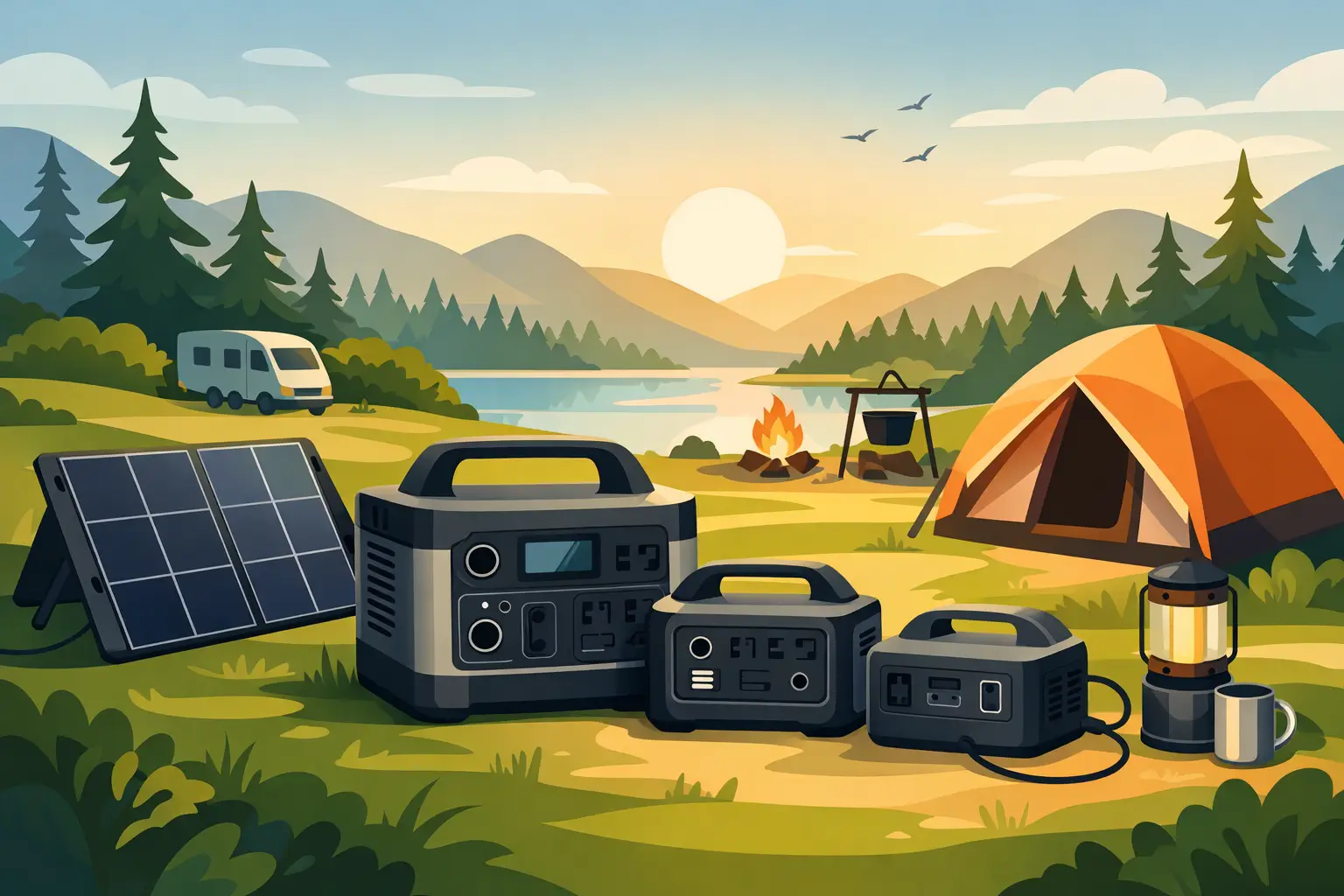
A campsite feels distinctly more considered when the essentials work without compromise: coffee is hot at sunrise, phones are charged for the trail, and the lanterns glow long after dinner. The best portable power stations for camping bring that welcome sense of ease to the outdoors, replacing noisy fuel-powered setups with quiet, convenient energy for the gear you actually use.
The right choice is not always the largest unit. A compact station can be an elegant solution for a weekend in a tent, while a higher-capacity model makes a glamping tent, camper van, or family basecamp feel far more complete. The key is matching its capacity, output, recharge options, and physical design to the way you camp.
Best Portable Power Stations for Camping: Start With Capacity
Capacity is measured in watt-hours, or Wh. It tells you how much energy the power station stores, much like the size of a fuel tank. A 500Wh station will not deliver a perfect 500Wh to every device because some energy is lost during conversion, but it offers a useful starting point for planning.
Begin with the items you want to power and how long you expect to use them. A phone may need only 10 to 20Wh for a full charge, while a laptop can require 50 to 100Wh. A compact electric cooler, CPAP machine, heated blanket, projector, or coffee maker changes the equation quickly. Check the wattage label on your equipment, then multiply watts by hours of use to estimate your needs.
These capacity ranges make shopping easier:
- Under 300Wh suits solo overnights, device charging, LED lights, cameras, and a small fan.
- 300Wh to 700Wh is a polished sweet spot for weekend campers who want to run several personal devices and selected small appliances.
- 700Wh to 1,500Wh fits families, longer stays, CPAP users, portable coolers, and more ambitious camp kitchens.
- Over 1,500Wh is best for van travel, extended off-grid trips, or campsites where household-style comfort is part of the plan.
Do not buy capacity based on one high-wattage item alone. A 1,500W power station may be able to run a 1,200W appliance, but its stored energy could still be depleted in less than an hour. Output and capacity serve different purposes, and both deserve attention.
Look Beyond Watt-Hours: Output Shapes What You Can Run
A power station’s continuous output, measured in watts, determines what it can operate at one time. If you want to use a blender, electric skillet, hair tool, compact heater, or coffee maker, look closely at the appliance’s running wattage and choose a station with comfortable headroom.
Surge power matters, too. Some devices, especially those with motors or compressors, draw a brief burst of extra power when starting. A portable refrigerator may run efficiently once it is cold but demand more at startup. Stations with a strong surge rating are a more confident choice for these situations.
Connection options should feel equally intentional. AC outlets are useful for standard household plugs, while USB-C Power Delivery is one of the most valuable features for current phones, tablets, cameras, and laptops. A 12V car-style port can support certain coolers and camping accessories. For a shared campsite, several USB ports and multiple AC outlets prevent the usual end-of-day charging shuffle.
An informative display is another premium detail worth having. Choose a model that clearly shows remaining battery percentage, incoming charging watts, outgoing watts, and estimated runtime. It turns power management from guesswork into a simple glance before a hike or dinner.
Recharge Options Matter on Longer Camping Trips
For one or two nights, charging your station fully at home may be all you need. For longer stays, flexible recharging becomes a defining feature. Most quality power stations can recharge from a wall outlet and a vehicle’s 12V outlet. Many also accept portable solar panels.
Solar charging is especially appealing for dispersed camping and scenic sites where quiet is part of the experience. Still, panel ratings are best treated as ideal conditions, not a promise. Tree cover, weather, season, panel angle, and available daylight all affect real output. A 200W panel may produce considerably less when the sun is low or the campsite is shaded.
Look for a station with an efficient solar input range and a compatible panel setup. If you expect to recharge daily, a larger panel array and a station that can accept higher solar input will be more practical than relying on a small emergency panel. It is also wise to confirm whether the station includes the needed cables and adapters, rather than assuming every accessory is in the box.
Choose a Battery Built for Your Camping Style
Battery chemistry affects longevity, weight, and value. Lithium iron phosphate, usually labeled LiFePO4, has become a favorite for frequent campers because it typically offers a longer cycle life and good thermal stability. It is an appealing choice for anyone who expects to use a station season after season, whether at campsites, backyard gatherings, or during occasional home outages.
Traditional lithium-ion models can be lighter and more compact for their capacity. That can be a real advantage when every pound must be carried from the car to a remote site. Neither option is automatically superior. A lightweight station may be ideal for a minimalist weekend, while a LiFePO4 model often makes more sense for repeat use and larger energy needs.
Weight deserves an honest assessment. A 1,000Wh power station can be substantial, particularly when you are navigating gravel, stairs, or uneven ground. Look for sturdy handles, a balanced shape, protected port covers, and a form that fits neatly in your vehicle. The most capable station is less appealing if it is too awkward to bring along.
The Features That Make Camp More Comfortable
The finest camping setups are not about bringing every household appliance outdoors. They are about choosing a few comforts that improve the experience. A quiet power station can keep a fan moving on warm nights, recharge a camera for early-morning wildlife shots, and power soft lighting around the table without the fumes or constant hum of a gas generator.
For family camping, prioritize enough outlets for multiple devices, a reliable lantern or built-in light, and a display that makes battery status easy to understand. For couples and glampers, a station that supports a projector, speakers, a compact cooler, and warm ambient lighting can create a memorable evening while preserving the calm of the setting.
If you use a CPAP machine, test the power draw at home before relying on a station overnight. Heated humidifiers and heated tubing can increase consumption significantly. The same practical rule applies to electric coolers: test the unit, account for outdoor temperatures, and avoid opening it constantly if runtime matters.
Weather protection is another area where expectations should stay realistic. Many power stations are designed for outdoor use but are not waterproof. Keep the unit under an awning, inside a tent vestibule with proper ventilation, or in a dry storage area. Never operate it in standing water, and avoid leaving ports exposed to dust, rain, or condensation.
Avoid the Most Common Buying Mistakes
The first mistake is choosing by peak wattage alone. A powerful inverter is useful, but insufficient battery capacity will limit how long you can enjoy it. The second is overestimating solar charging in a shaded forest campground. Solar is a wonderful supplement, but it performs best with clear exposure and realistic expectations.
Another common issue is powering resistive heating appliances. Space heaters, full-size electric grills, kettles, and hair dryers can drain even a large station quickly. They are usually better reserved for short, occasional use, if at all. For campsite cooking, propane, a camp stove, or foods prepared in advance often provide a more efficient balance.
Finally, remember that a portable power station is a refined convenience, not a substitute for basic preparedness. Bring charged headlamps, a power bank for a phone, and a plan for changing weather. Those simple layers make your campsite more capable and your time away more relaxed.
A thoughtfully chosen power station lets you bring the comforts that matter most while leaving the noise, clutter, and unnecessary excess behind. Select the capacity that supports your real routine, protect it from the elements, and let your next campsite feel a little more like your favorite place to unwind.











Leave a comment