Freestanding Tub Versus Walk-In Shower Choices
A bathroom can have beautiful tile, polished hardware, and excellent lighting, yet still feel wrong if its main fixture does not match the way you live. The freestanding tub versus walk in shower decision shapes the room’s daily comfort, visual impact, and long-term value more than almost any other choice. One brings a hotel-inspired sense of retreat; the other creates a streamlined routine built for speed and accessibility.
Freestanding Tub Versus Walk-In Shower: The Real Difference
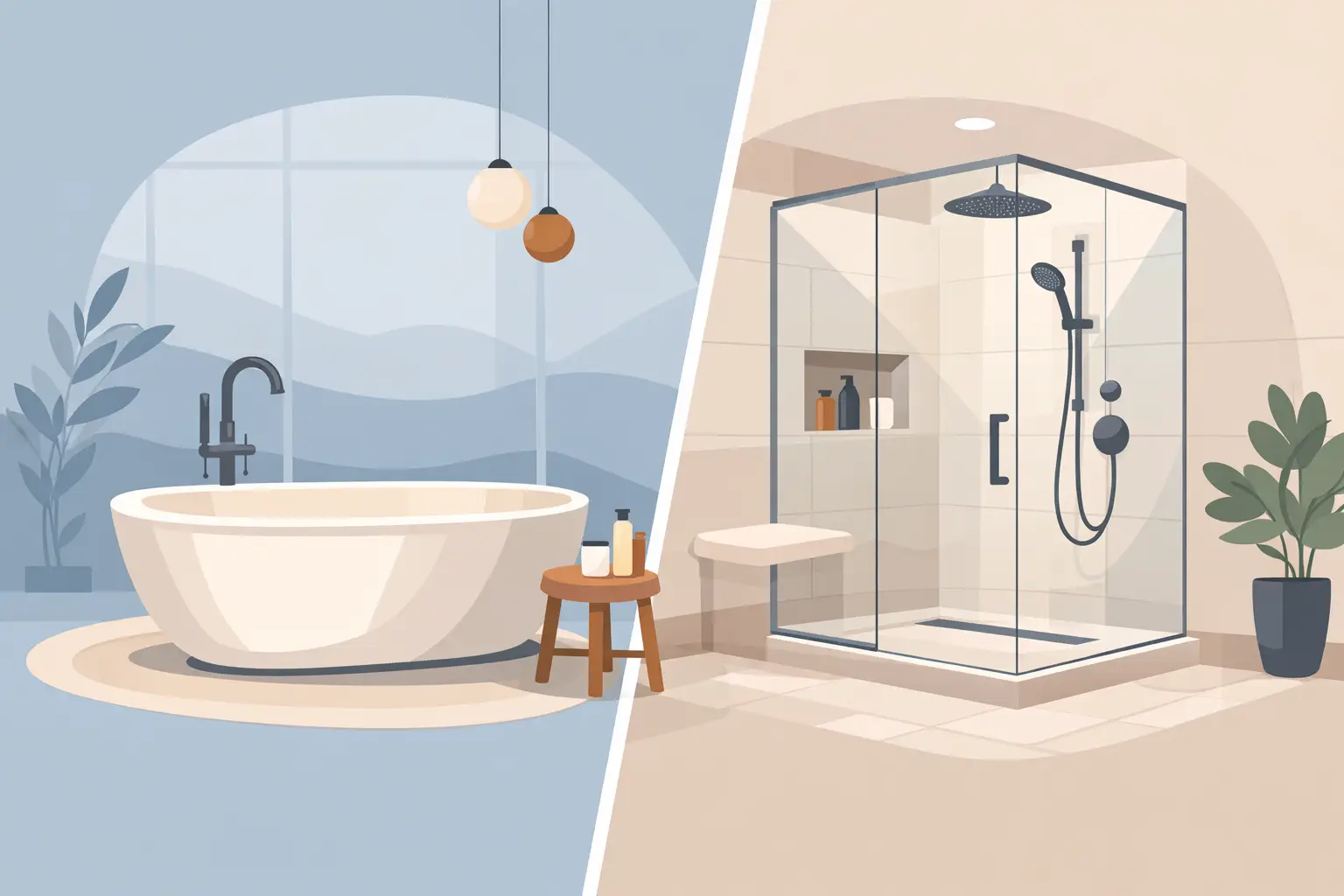
A freestanding tub is primarily about the experience of bathing. Positioned as a sculptural focal point rather than tucked into an alcove, it turns open floor space into a personal escape. From classic slipper silhouettes to sleek oval designs, the right tub can make a primary bath feel more considered and luxurious without requiring ornate decor.
A walk-in shower is designed around convenience. Most feature a low threshold or curbless entry, a broad glass enclosure, and an open visual line that makes the whole room appear larger. It is often the more practical fixture for busy mornings, shared bathrooms, and households planning to stay in their home for years.
Neither option is automatically the better upgrade. The best choice depends on whether your bathroom needs a destination for unwinding, a high-functioning daily station, or a carefully planned combination of both.
Choose a Freestanding Tub for a Statement Retreat
Freestanding tubs earn their appeal through presence. They offer a sense of spaciousness that built-in tubs rarely match, especially when placed near a window, under a chandelier, or against a richly textured tile wall. Even in a restrained neutral palette, the tub becomes the centerpiece that gives the room its point of view.
This choice works especially well for homeowners who genuinely enjoy soaking. A deep tub can turn a quiet evening into a ritual: warm water, soft light, a book within reach, and a room that feels separate from the pace of the rest of the house. For a primary suite with generous square footage, that experience can feel like a meaningful everyday luxury rather than an occasional indulgence.
There are practical considerations. Freestanding tubs require clearance around the exterior for cleaning, and floor-mounted or wall-mounted faucets may add plumbing complexity. The tub’s weight also matters, particularly with heavy cast iron models or second-floor installations. Acrylic options are typically lighter, warmer to the touch, and easier to install, while solid-surface designs offer a substantial, refined appearance.
A tub is also less efficient for a fast morning routine. If it is the only bathing fixture in the room, consider who uses the space. Families with young children may value a tub, but adults who shower every day may find that a tub-only layout becomes frustrating over time.
Choose a Walk-In Shower for Effortless Daily Use
A walk-in shower gives a bathroom a clean, expansive look while serving the habits most households rely on. With frameless glass, large-format tile, a ceiling-mounted rain shower, or a handheld sprayer, it can feel every bit as elevated as a soaking tub while being much easier to use every day.
The design flexibility is a major advantage. A compact bathroom can benefit from a clear glass panel that keeps sightlines open, while a larger primary bath can accommodate a spacious shower zone with a bench, recessed niches, dual showerheads, and striking stone-look tile. Thoughtful details such as warm metal fixtures and integrated lighting can turn a functional shower into an exquisite feature.
Accessibility is another strong reason to choose this route. A low-entry shower reduces the need to step over a high tub wall, which can be useful for aging in place, recovering from an injury, or simply moving through a busy morning more comfortably. A properly designed curbless shower needs careful waterproofing and drainage planning, so this is a place to prioritize experienced installation rather than shortcuts.
The trade-off is that a shower may not provide the same emotional pull as a freestanding tub. It can be visually stunning, but it does not replace a long soak for someone who sees bathing as a favorite form of relaxation.
Consider Your Space Before Choosing the Fixture
A freestanding tub needs more breathing room than its dimensions suggest. Beyond the tub itself, allow enough clearance to enter comfortably, clean around it, and avoid making the room feel crowded. In a small bath, forcing a large tub into the layout can make even premium finishes feel cramped.
Walk-in showers use square footage differently. A shower can fit neatly along one wall or into a corner, and clear glass helps preserve an open feel. Still, a very small shower can feel restrictive, so avoid sacrificing elbow room just to claim the walk-in look. A comfortable shower footprint and strong storage usually deliver more daily value than oversized decorative features.
In a larger bathroom, a separate tub and shower can offer the most complete experience. This arrangement makes sense when the layout supports it without compromising vanities, linen storage, or circulation. It is a high-end solution, but not one worth pursuing if it makes the room harder to use.
Think About Cleaning, Water Use, and Maintenance
Both fixtures need regular care, just in different ways. Freestanding tubs have exposed surfaces and flooring around the base, so dust and splashes can collect where a built-in tub would have sealed edges. Their smooth interiors are generally simple to wipe down, but mineral-rich water may leave deposits around faucet fixtures.
Walk-in showers have more tile, grout, glass, and hardware to maintain. Frameless glass looks exceptionally polished, but it benefits from a quick squeegee after use to prevent water spots. Larger tiles and minimal grout lines can reduce upkeep while creating a more contemporary finish. Choose slip-resistant flooring rather than selecting tile on appearance alone.
Water use depends more on habits than fixture type. A long soak in a deep tub can use substantial water, while an extended shower with multiple body sprays can do the same. Low-flow showerheads, efficient valves, and mindful use help keep either option aligned with a more considered home.
What Helps Most With Resale Appeal?
Resale value is local and household-specific, so there is no universal rule. In many family-oriented markets, keeping at least one tub in the home can broaden appeal for buyers with young children. In a primary bathroom, however, a spacious, well-finished walk-in shower is often a highly desirable feature, particularly for buyers who value modern design and accessible living.
If your home has multiple bathrooms, the decision becomes easier. Retain a functional tub elsewhere, then design the primary bath around the experience you will use most. That approach preserves flexibility without asking one room to do everything.
For a home with only one bathroom, think more carefully before removing the sole tub. A refined tub-shower combination may be the most balanced choice in that situation, especially when space is limited and future buyers may have different needs.
Make the Choice Feel Intentional
Start with your real routine, not a showroom fantasy. If you shower quickly every morning and rarely take baths, prioritize a walk-in shower with generous storage, excellent lighting, and fixtures that make the routine feel elevated. If a bath is your preferred way to reset, give the freestanding tub enough space to look purposeful rather than squeezed into a corner.
Then consider the mood you want from the room. A freestanding tub suits a softer, spa-like composition with layered lighting, natural textures, and room to pause. A walk-in shower supports a crisp, architectural look, where glass, tile, and premium hardware create a polished sense of order.
The most successful bathroom upgrades do not chase a single trend. They pair beautiful materials with a layout that makes everyday life feel easier. Choose the fixture that will invite you to enjoy the room, not just admire it when the renovation is complete.









Leave a comment